Matt Kuzdub on internal/external focus in tennis coaching
http://www.mattspoint.com/blog/pay-attention-external-vs-internal-focus-instructions-in-tennis
Matt Kuzdub on internal/external focus in tennis coaching
http://www.mattspoint.com/blog/pay-attention-external-vs-internal-focus-instructions-in-tennis
„Sprache schafft Wirklichkeit“ (Ludwig Wittgenstein)
Über die psychologische Wirkung von Worten in der Kommunikation zwischen Coach und Spieler*in. Ein Artikel von Frercks Hartwig in Tennistraining Junior 3/2017. Weitere spannende Artikel zum Kindertraining im aktuellen Heft.
A wonderful drill for doubles to improve recovery and arrangement with your double-partner. Implicit and constraints-led. Presented by Marc Philipp Detert at the „Tennisassistenten“-course 2017 at TC Rottweil.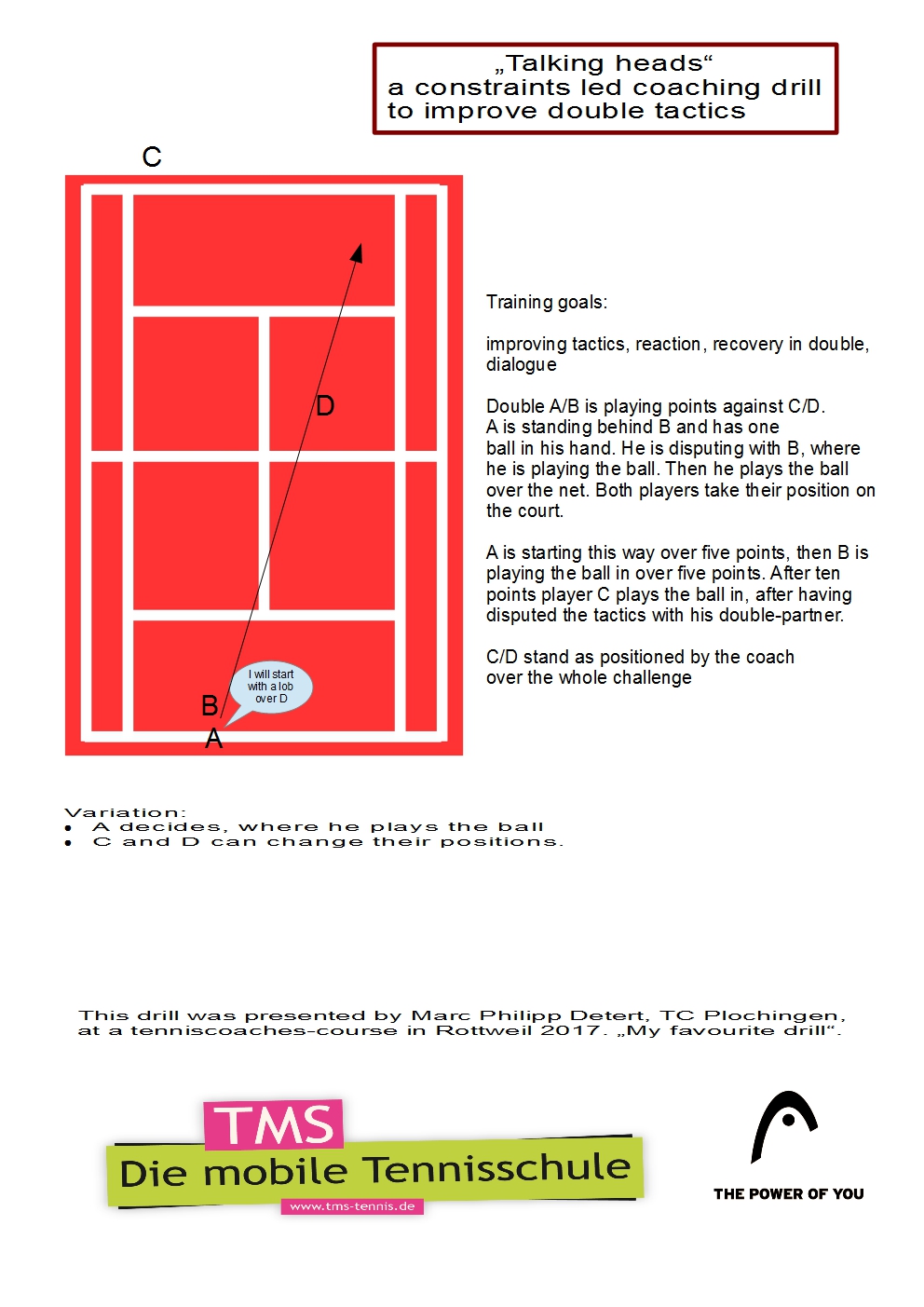
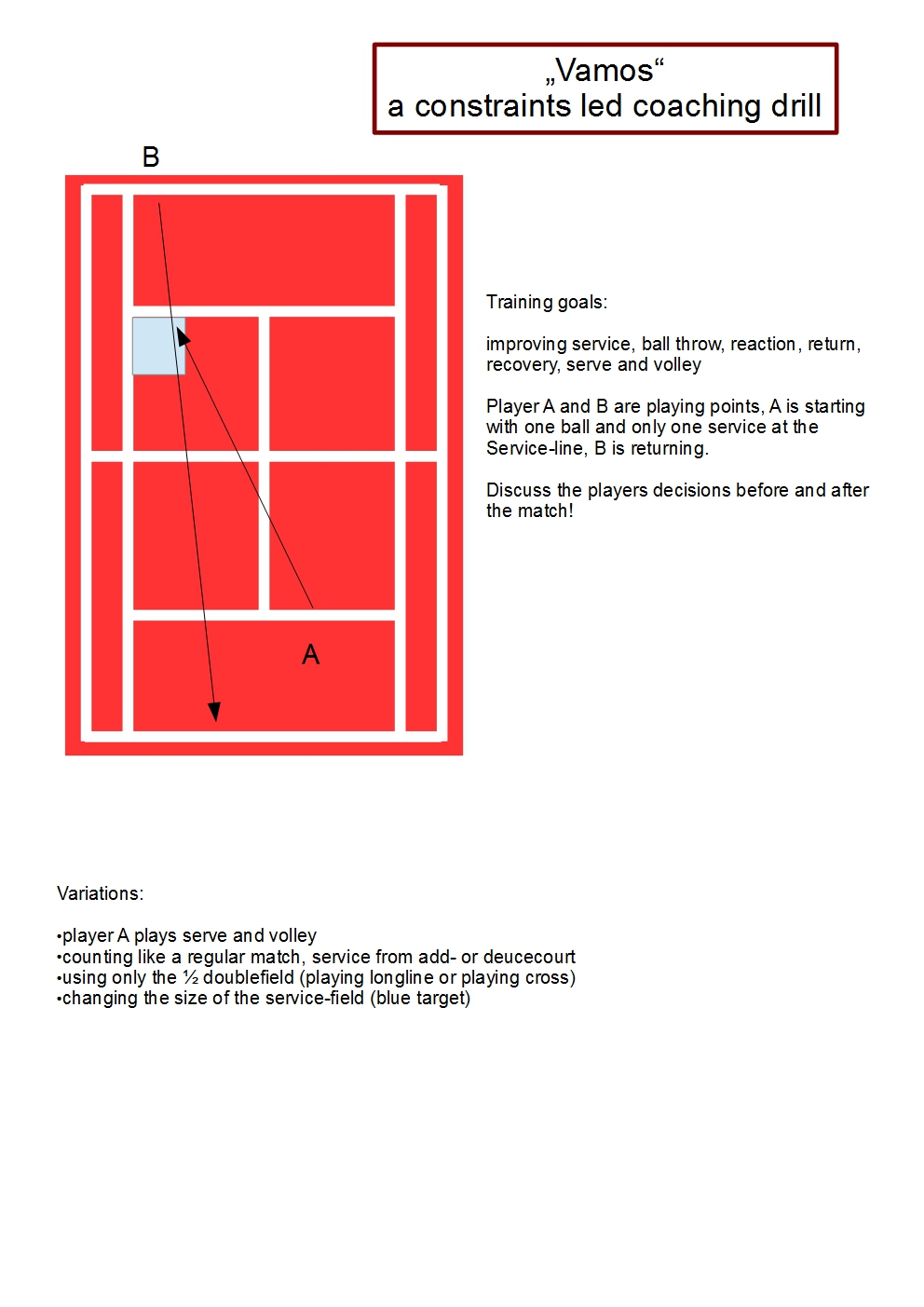
Another constraints led coaching drill to improve service, return and recovery.
„A child’s view of their own sporting experience is very different. It’s generally about fun, friends, competition, play, learning and a love of the game. That’s easy to forget if you’re an all-too-serious adult.“
„Through sport, children enjoy the opportunity to learn so many lessons that apply to life. Achievement, failure, team work, adaptability, winning, pride, overcoming adversity, purpose and more. If we create environments with the player at the heart of it that includes challenge, but is driven by understanding then we can help them navigate through the ups and downs, ensuring they develop as people and players. Adopting and accepting non-linear pedagogy means that the coach embraces the learning process from their own and the player’s perspective, resulting in an ability to work with the many forces at play.“